
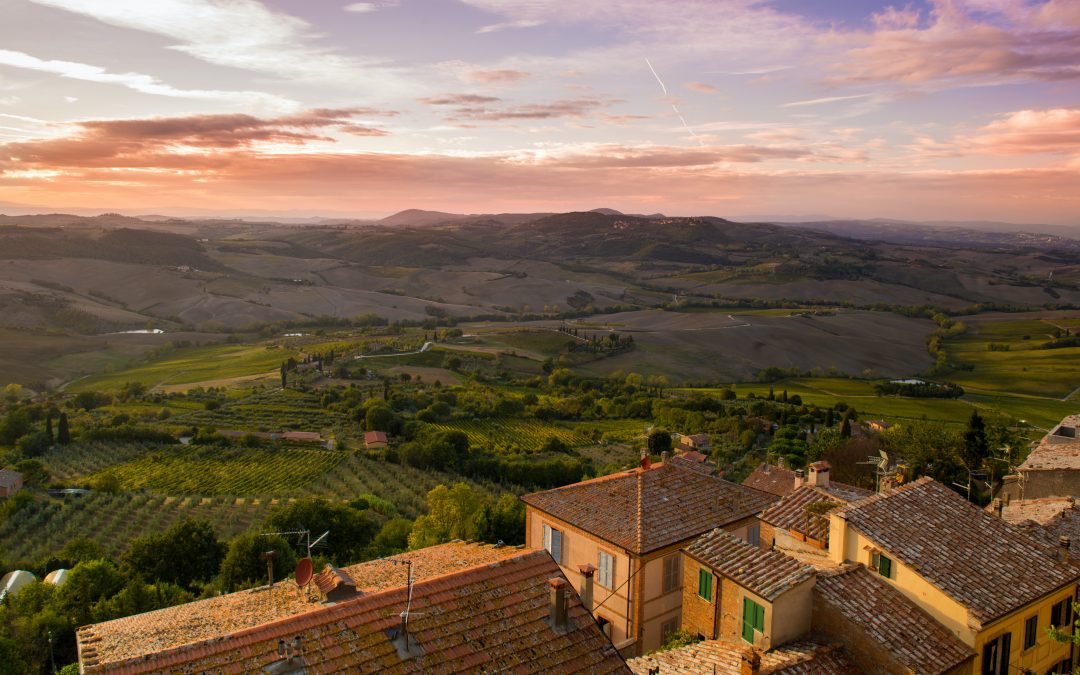
Italian wines span an array of styles and classifications. While this can be somewhat confusing, it makes the exploration of the country’s top wine regions very interesting. Whether you’re seeking a full-bodied red or a bright, vibrant white, Italy’s diverse wines have something to offer everyone at a variety of price points. While there are seemingly endless granular idiosyncrasies of Italian wine, this broad overview of a few of the country’s regions will get you started, ordered from north to south.
Piedmont
Located in northwest Italy, Piedmont sits at the foot of the western Alps. The climate is influenced by chilly mountain climes and the balmy Mediterranean. It creates the perfect growing conditions for Nebbiolo, the black grape that produces the region’s most famous wines: Barolo DOCG and Barbaresco DOCG. Two other red grapes, Barbera and Dolcetto, are also well known and enjoyed for their more accessible price points and drinkability in the short term.
Lombardy
Located in north-central Italy, Lombardy is home to some of the country’s most beautiful lakes. The cooling influence of the Alps makes it a haven for sparkling wine. Franciacorta DOCG, along Lake Iseo, is one of the premier metodo classico (traditional method) wines from Italy made from Chardonnay, Pinot Bianco and Pinot Nero. For red wines, Nebbiolo is the main grape in Valtellina Rosso DOC, Valtellina Superiore DOCG and Sforzato di Valtellina DOCG.
Friuli-Venezia Giulia
In the far northeast corner that borders Austria and Slovenia, Friuli’s landscape juxtaposes the Alps against the Adriatic’s coastal flatlands. The unique climate provides optimal conditions for a range of white and red grapes.
More than 75% of the production is white wine, focused on Pinot Grigio, Sauvignon Blanc, Ribolla Gialla and Friulano. Reds from Merlot, Refosco and Schioppettino are delightful, if less well-known.
Tuscany
Tuscany is centrally positioned along the Tyrrhenian Sea on the west coast and stretches inland across rolling countryside. For reds, its most famous Sangiovese-based wines are the Chianti, Chianti Classico ,Vino Nobile di Montepulciano and Brunello di Montalcino DOCGs. Many wines are labeled as Toscana IGT because they don’t conform to traditional production rules. These wines can be 100% Sangiovese or with blends of international varieties like Cabernet Sauvignon or Syrah. For whites, the most famous appellation is Vernaccia di San Gimignano DOCG.
Abruzzo
Abruzzo is a mountainous region rich in ancient winemaking traditions. Abruzzo is fifth by volume in production, known predominantly for the Montepulciano grape, not to be confused with the Tuscan region that focuses on Sangiovese. Montepulciano d’Abruzzo DOC is the region-wide denomination for red wines made from the grape, while Cerasuolo d’Abruzzo DOC is the denomination for the region’s rosé wines made from the same variety. Trebbiano d’Abruzzo DOC is the main white grape of the region.
Sicily
The largest island in the Mediterranean, Sicily’s dry, warm climate and copious sunshine are perfect for viticulture. There are fruity, medium-bodied red wines made from Nero d’Avola and juicy, peachy white wines made from Grillo, which are most prolific from the Sicilia DOC. In the south, Nero d’Avola is blended with Frappato for Cerasuolo di Vittoria DOCG. The red grape Nerello Mascalese and the white grape Carricante produce sought-after wines from the Etna DOC. Marsala DOC is the fortified wine from the west.